

The Science of the Purr
Contentment: The most common reason; a sign of safety and relaxation.
Healing: Purring frequencies (25–150 Hz) can help repair bones and tissues.
Communication: Kittens use it to bond with mothers; adults use it to signal needs.
Hunger: A specific “solicitation purr” mimics a baby’s cry to get attention.
Stress Relief: Cats often purr to self-soothe when in pain or anxious.
If you share your home with a feline friend, there is no sound more comforting than the rhythmic rumble of a purr. It is the soundtrack of cozy evenings and lazy Sunday mornings. But have you ever stopped to ask: Why do cats purr?
While most of us assume it is simply a smile in sound form—a sign of pure happiness—the truth is far more complex. Feline behavior experts have discovered that cats use this unique vocalization for everything from communication and hunger to self-healing and stress relief.
In this guide, we will decode the secret language of the purr and explore what your cat is actually trying to tell you.
1. Happiness and Contentment
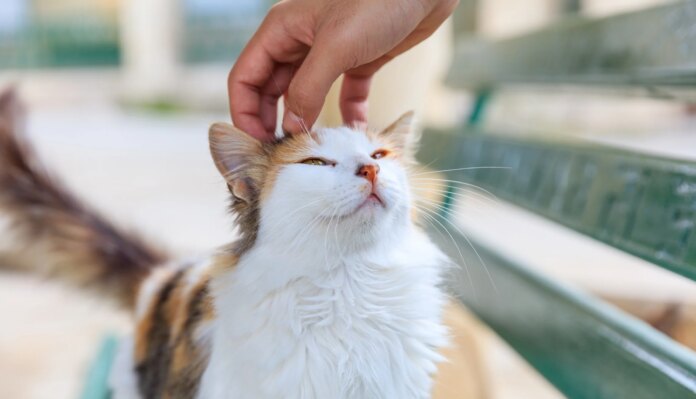
Let’s start with the most obvious answer to why do cats purr. When your cat is curled up on your lap, eyes half-closed, kneading “biscuits” on a soft blanket, that purr is a clear signal of satisfaction.
In this context, the purr releases endorphins in your cat’s brain, acting as a calming agent. It signals to you (and other cats) that they feel safe, secure, and relaxed in their environment.
2. The Healing Power of the Purr
One of the most fascinating discoveries in veterinary science is that a cat’s purr may actually be a biological healing mechanism.
Research suggests that domestic cats purr at a frequency between 25 and 150 Hertz (Hz). This specific range corresponds with frequencies used in therapeutic vibration therapy for humans.
Bone Repair: Frequencies between 25 and 50 Hz are known to strengthen bone density and promote fracture healing.
Muscle Recovery: Higher frequencies help repair soft tissue and reduce pain and swelling.
This explains why cats are often observed purring after an injury or while recovering from surgery. They aren’t just happy; they are actively engaging in “purr therapy” to fix themselves!
3. The “Solicitation Purr”: I’m Hungry!
Have you ever noticed that your cat’s purr sounds different in the morning when the food bowl is empty? You aren’t imagining it.
Researchers have identified a specific type of vocalization called the solicitation purr. Unlike the low, rhythmic rumble of contentment, this purr includes a high-frequency sound that mimics the frequency of a human baby’s cry (around 300–600 Hz).
This “cry embedded in the purr” triggers a nurturing instinct in humans—or at the very least, makes the sound urgent and annoying enough that we get out of bed to fill the bowl. It is a brilliant evolutionary trick to ensure they get fed!
4. Mother and Kitten Connection

To understand why do cats purr, we have to look at kittenhood. Kittens are born blind and deaf, but they can feel vibrations immediately.
The Beacon: A mother cat purrs to act as a vibrational homing beacon, guiding her kittens to her body for warmth and nursing.
Feedback: Kittens start purring back as early as two days old. This signals to the mother that they are feeding well and are content.
5. Stress and Self-Soothing
It can be confusing for pet parents to hear their cat purring at the vet’s office or when they are clearly frightened. Why would they purr if they are scared?
Much like a nervous human might hum a tune or tap their foot to calm down, cats purr to self-soothe. The physical vibration helps lower their blood pressure and regulate their breathing. If your cat is purring in a stressful situation, they aren’t happy—they are trying to cope.
Recap: Decoding the Purr
So, why do cats purr? It is a multi-tool for survival and communication.
To say “I’m happy”: The classic sign of relaxation.
To say “I’m hungry”: The urgent, high-pitched solicitation purr.
To heal: Vibrations that repair bones and tissues.
To calm down: A self-soothing mechanism during stress.
Frequently Asked Questions (FAQ)
Q: How do cats purr?
A: Cats purr by using their throat muscles (laryngeal muscles) to rapidly open and close the space between their vocal cords (the glottis). This happens during both inhalation and exhalation, creating a continuous sound.
Q: Do big cats purr?
A: Most big cats (like lions, tigers, and leopards) cannot purr; they roar instead. However, smaller wild cats like bobcats, cheetahs, and cougars can purr. The rule of thumb is: if it roars, it doesn’t purr.
Q: Does a cat purring always mean they are happy?
A: No. While it often indicates happiness, cats also purr when they are in pain, frightened, or hungry. You must look at their body language (ears, tail, and posture) to understand the context.
Q: Can a cat’s purr heal humans?
A: While not a medical replacement, the frequency of a cat’s purr (20–140 Hz) is in the range that can lower human blood pressure and decrease stress levels. It is why cat owners often report feeling calmer when holding their pets!

Want to reward your purring companion? Stop by your local Hollywood Feed to pick up some delicious treats or a cozy new bed that will get that motor running. Follow our blog for more insights into your pet’s behavior!

