

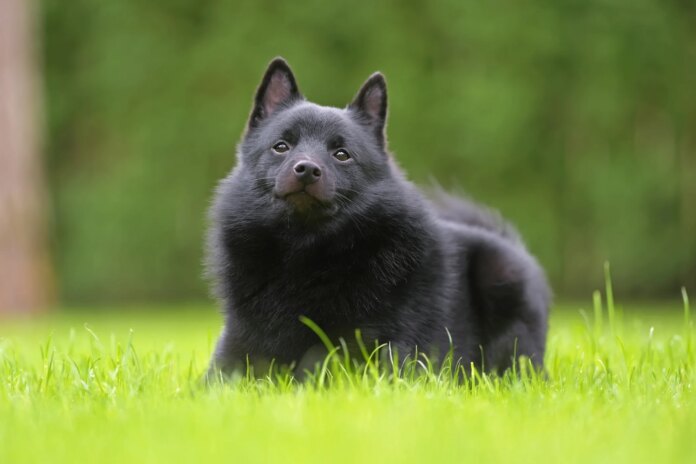
The Schipperke at a Glance
Personality: Curious, confident, and highly energetic. Known as “big dogs in small bodies.”
Size: Small. 10–16 lbs; 10–13 inches tall.
Coat: Distinctive black double coat with a ruff around the neck.
Lifespan: 13–15+ years.
Best For: Active families, experienced owners, and homes with secure yards.
If you are looking for a dog that combines the portability of a toy breed with the stamina and bravery of a working dog, the Schipperke might be your perfect first mate. Pronounced “SKIP-er-key,” this Belgian breed is often called the “Little Captain” because of its history as a barge dog, guarding boats and chasing rats along the canals of Flanders.
In this Schipperke Dog Breed Guide, we will navigate the unique traits of these spirited black dogs, from their fox-like faces to their surprisingly big voices.
What is a Schipperke?
The Schipperke is a small, black dog breed from the Spitz family (which includes Huskies and Pomeranians). While they may look like miniature wolves or foxes, they were originally bred as working dogs.
Origin: Belgium (Flanders region).
Job: They served as watchdogs and ratters on canal barges.
Appearance: They are famous for their solid black coat, lack of a tail (historically docked, though some are born naturally bobtailed), and a distinctive “ruff” of fur around the neck that gives them a sloping silhouette.
Personality: The “Little Black Devil”
In their home country of Belgium, they are affectionately nicknamed le petit diable noir (“the little black devil”). This isn’t because they are mean, but because they are mischievously smart and endlessly curious.
The Watchdog: Do not let their size fool you. A Schipperke takes their job seriously. They are naturally suspicious of strangers and will alert you to anything out of the ordinary—a leaf blowing, the mail carrier, or a car parking three houses down.
Curiosity: They have to inspect everything. If a cabinet door is open, a Schipperke is inside it.
Independence: Unlike clingy lap dogs, Schipperkes are independent thinkers. They love their humans, but they often have their own agenda.
High Energy: These are not couch potatoes. They need a job to do, or they will invent one (like rearranging your shoes).
Training Note: Because they are intelligent but stubborn, positive reinforcement training is essential. They will shut down if treated harshly but will work happily for high-value treats.
Care Guide: Keeping the Captain Happy
Owning a Schipperke is a commitment to activity. They are small, but they require the care of a much larger, active breed.
1. Grooming the Double Coat
Schipperkes have a unique double coat: a soft, downy undercoat and a harsh outer coat.
Weekly Brushing: You should brush them once or twice a week to remove dead hair and keep the coat shiny.
“Blowing Coat”: Twice a year (usually spring and fall), they will “blow” their undercoat. During this time, they shed heavily and will need daily brushing to prevent tumbleweeds of fur in your home.
Bathing: They are naturally clean dogs with very little “doggy odor.” Bathing is only necessary when they get dirty.
2. Exercise and Activity
A bored Schipperke is a destructive Schipperke.
Zoomies: They are famous for running in circles at high speed. A fenced yard is highly recommended.
Mental Stimulation: Because they are smart, physical exercise isn’t enough. Puzzle toys, lick mats, and agility training are great ways to tire out their brains.
Leash Safety: They have a high prey drive (thanks to their ratting history). Never walk a Schipperke off-leash in an unfenced area; if they see a squirrel, they will chase it.
3. Nutrition
Schipperkes are food-motivated and can easily become overweight if overfed.
Diet: A high-protein diet is best to fuel their high energy levels.
Weight Control: Be careful with treats. Because they are small dogs, even a few extra calories a day can lead to weight gain, which stresses their joints.
Health and Quirks

The Schipperke is generally a very healthy, long-lived breed, but there are specific things to watch for.
Common Health Issues
MPS IIIB: A genetic mutation specific to this breed that affects the nervous system. Responsible breeders will always test for this before breeding.
Luxating Patella: A condition where the kneecap slips out of place, common in many small breeds.
Legg-Calvé-Perthes Disease: A hip condition affecting blood supply to the bone.
Hypothyroidism: Can cause weight gain and coat issues.
Unique Quirks
The “Schip Roar”: They don’t just bark; they have a range of vocalizations including a unique howl-bark mixture used to alert their owners.
Door Dashing: As former boat guards, they are wired to patrol boundaries. They are notorious for trying to dart out open doors.
Recap: Is a Schipperke Right for You?
To summarize this Schipperke Dog Breed Guide, this breed is an excellent choice if you want:
A small dog that isn’t fragile or dainty.
A loyal alarm system that will always let you know when someone is near.
A smart companion for agility or obedience sports.
A low-maintenance coat that doesn’t require professional trimming.
However, they may not be right for you if you want a silent dog or one that can be walked off-leash.
Frequently Asked Questions (FAQ) About the Schipperke Dog Breed
Q: Do Schipperkes bark a lot?
A: Yes. They were bred to be watchdogs on barges, so alerting their owners is in their DNA. They are vocal dogs and will bark at strangers, noises, and squirrels. Training “quiet” commands early is crucial.
Q: Are Schipperkes good with children?
A: Generally, yes. They are sturdy and playful, making them good playmates for respectful children. However, they can be nippy if teased, so supervision is always required.
Q: How much exercise does a Schipperke need?
A: They need at least 30–60 minutes of active exercise daily. A simple walk around the block usually isn’t enough; they need playtime, fetch, or mental puzzles to truly settle down.
Q: Do Schipperkes have tails?
A: Historically, their tails were docked. However, some Schipperkes are born with natural bobtails, and others have full, curling tails that rest over their backs.

Think the “Little Captain” is the right crewmate for your family? Visit your local Hollywood Feed to stock up on puzzle toys and high-quality training treats to keep your smart Schipperke entertained and happy! Check out or blog for more about the right dog breed for you!

