

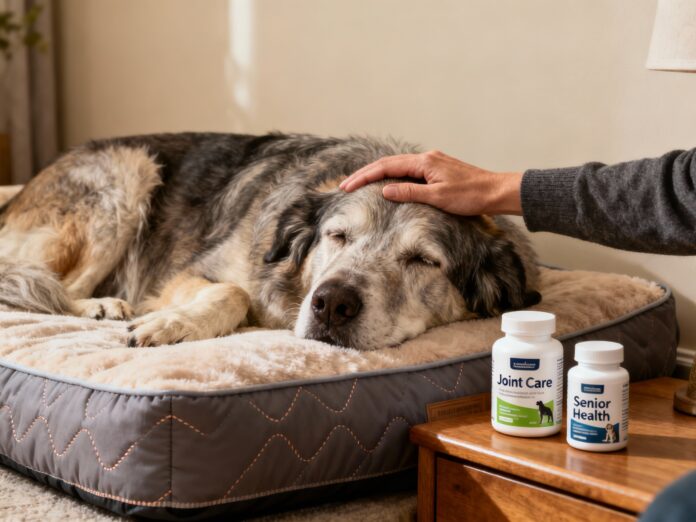
Understanding Joint Health in Senior Dogs
As dogs age, their bodies quietly change long before we notice it. Joints—those hard-working hinges between bones—carry years of running, jumping, and playing. Just like in humans, the wear and tear eventually show up as stiffness, soreness, or arthritis.
Senior dogs are especially prone to degenerative joint conditions because the protective cartilage between their bones gradually thins. The result? More friction, less cushioning, and a lot more discomfort. When we talk about joint supplements and advanced care, we’re really talking about one core goal: helping older dogs stay comfortable, mobile, and happy for as long as possible.
Common Age-Related Joint Problems
Osteoarthritis (Degenerative Joint Disease)
Osteoarthritis (OA) is the most common joint problem in senior dogs. The smooth cartilage that once protected the ends of the bones becomes rough, thin, and inflamed. Over time, this leads to:
- Pain and stiffness
- Reduced range of motion
- Reluctance to move or play
Large-breed dogs (like Labradors, German Shepherds, and Golden Retrievers) are especially prone to arthritis, but any dog can develop it—even small breeds.
Hip and Elbow Dysplasia
Some dogs develop joint issues not only from age, but from genetics. Hip or elbow dysplasia means the joint didn’t form quite right. With age, the imperfect fit causes extra wear, which often leads to arthritis earlier and more severely. Joint supplements can help support these damaged joints, but they’re just one part of the bigger treatment plan.
How Aging Impacts Mobility
As your dog gets older, muscles may weaken, joints become less flexible, and stamina drops. What used to be a fun 30-minute walk might turn into a slow 10-minute stroll with more rest breaks. You may notice:
- Difficulty jumping on the couch or into the car
- Hesitation when going up or down stairs
- A “bunny hop” gait or stiffness after naps
Think of it like rusty hinges on a door: without enough lubrication and care, every movement becomes harder. That’s exactly what we’re trying to help with joint supplements and advanced joint care.
Signs Your Senior Dog May Need Joint Support
Early, Subtle Warning Signs
Dogs are masters at hiding pain. But their bodies tell the truth. Watch for:
- Taking longer to stand up after lying down
- Slight limp that comes and goes
- Less interest in running, jumping, or playing fetch
- Sleeping more than usual
- Hesitating before using stairs or slippery floors
These early signs are often dismissed as “just getting old,” but age is not a disease—pain is.
Advanced Symptoms You Shouldn’t Ignore
More serious signs include:
- Crying, yelping, or whining when moving
- Constant licking or chewing at joints
- Noticeable muscle loss in back legs
- Difficulty squatting to pee or poop
- Refusing favorite activities altogether
If you’re seeing this level of discomfort, it’s time for a full veterinary exam and a structured joint care plan, not just a random supplement from the pet store.
Types of Joint Supplements for Senior Dogs
Glucosamine and Chondroitin
Glucosamine and chondroitin are like the classic “starter pack” for joint support. They help:
- Protect and support cartilage
- Improve joint lubrication
- Reduce stiffness over time
You’ll find them in popular brands like Cosequin or Dasuquin, which many veterinarians recommend.
Omega-3 Fatty Acids and Fish Oil
Omega-3s (especially EPA and DHA) found in fish oil are powerful anti-inflammatories. They can:
- Reduce joint inflammation
- Improve comfort and mobility
- Support heart, skin, and brain health too
Brands like Nordic Naturals and Welactin from Nutramax make pet-specific omega-3 formulas that are easier to dose safely.
MSM, Green-Lipped Mussel & Other Add-Ons
Many advanced joint supplements include extra ingredients:
- MSM (Methylsulfonylmethane): helps with inflammation and stiffness
- Green-lipped mussel: a natural source of omega-3s and joint-supporting compounds
- Hyaluronic acid: helps improve joint lubrication
- Turmeric/curcumin: herbal anti-inflammatory support
These combinations aim to attack joint pain from multiple angles, making them especially useful for older dogs with moderate to severe arthritis.
Choosing the Right Joint Supplement
Key Ingredients to Look For
When picking a supplement, flip to the label and look for:
- Glucosamine (often 500–1000 mg per dose for medium/large dogs)
- Chondroitin
- MSM
- Omega-3 fatty acids (EPA/DHA)
- Optional: green-lipped mussel, hyaluronic acid, turmeric
Avoid products that are mostly fillers with just a sprinkle of active ingredients. If the good stuff is way down at the bottom of the list in tiny amounts, skip it.
Forms: Chews, Powders, Liquids, or Prescription
You’ll find joint supplements in:
- Soft chews: dog-friendly, easy to give like treats
- Tablets or capsules: better for some dogs, especially with food
- Powders: easy to sprinkle on meals
- Liquids: helpful for picky eaters or very small dogs
Some joint-support products are prescription-only, especially those that combine pain relief with joint support. Your vet can guide you if your dog needs something stronger than an over-the-counter formula.
How Joint Supplements Actually Work
Lubricating Joints and Protecting Cartilage
Glucosamine, chondroitin, and hyaluronic acid help the body:
- Produce more joint “cushion”
- Support healthy cartilage
- Improve joint fluid thickness and quality
Think of these ingredients as the oil in an engine. The better the lubrication, the smoother the movement, and the less “grinding” inside the joint.
Reducing Inflammation and Pain Naturally
Omega-3 fatty acids, MSM, green-lipped mussel, and turmeric work more on the inflammation side by:
- Reducing inflammatory molecules in the body
- Supporting better joint comfort
- Making movement less painful overall
Supplements aren’t instant painkillers. They’re more like long-term maintenance and slow repair tools, which is why consistency is so important.
Advanced Veterinary Care for Senior Dog Joints
Joint supplements are powerful, but sometimes they’re not enough on their own—especially with moderate to severe arthritis.
Prescription Pain Relief & Anti-Inflammatories
Vets often prescribe:
- NSAIDs (non-steroidal anti-inflammatory drugs) like carprofen or meloxicam
- Gabapentin or tramadol for nerve-related or chronic pain
- Other medications tailored to your dog’s health and age
These medications can dramatically improve quality of life when used correctly under veterinary supervision.
Injectable Joint Therapies (Like Adequan®)
Products like Adequan® Canine (polysulfated glycosaminoglycan) are given as injections and work by:
- Protecting cartilage
- Improving joint fluid quality
- Slowing down further joint damage
Many owners see noticeable improvements in mobility after a series of injections, especially when combined with oral joint supplements.
Laser Therapy, Acupuncture & Rehab
Modern veterinary medicine isn’t just pills and shots. Many clinics offer:
- Cold laser therapy to reduce pain and inflammation
- Acupuncture, which can be surprisingly helpful for chronic pain
- Physical therapy / canine rehabilitation, including underwater treadmills, balance work, and stretching
These advanced therapies can be game-changers for senior dogs who are struggling.
Lifestyle Changes That Protect Aging Joints
Weight Management & Diet Tweaks
Extra weight is the enemy of aging joints. Every extra pound puts more pressure on hips, knees, and spine.
Helpful steps:
- Feed a senior or joint-support formula diet
- Measure meals instead of free-feeding
- Use healthy, low-calorie treats
- Work with your vet to find your dog’s ideal weight
Even losing a small percentage of body weight can significantly reduce joint pain.
Low-Impact Exercise & Gentle Movement
Senior dogs still need to move. The key is smooth and gentle, not explosive.
Good options:
- Short, frequent walks instead of long hikes
- Swimming (if your dog likes water and it’s safe)
- Gentle play sessions on soft surfaces
Movement helps lubricate joints naturally and maintain muscle mass, which supports those joints.
Home Environment Modifications
Make your home easier on your dog’s body:
- Add ramps instead of expecting them to jump into cars or onto beds
- Use non-slip rugs or mats on slippery floors
- Provide orthopedic dog beds with memory foam
- Raise food and water bowls for very stiff necks and shoulders
These small changes can dramatically reduce daily strain.
How to Introduce Joint Supplements Safely
Talking to Your Veterinarian First
Before you add anything new to your dog’s routine, talk to your vet. This is extra important if:
- Your dog is on other medications
- Your dog has kidney, liver, or heart disease
- You’re considering multiple supplements at once
Your vet can help you choose evidence-backed brands and safe dosages.
Dosing, Timing, and Realistic Expectations
- Start with the dose recommended by your vet or the product
- Give supplements daily—consistency is key
- Expect to wait 4–6 weeks to see full benefits in many cases
Joint supplements are not magic. They work best as part of a bigger plan that includes weight control, exercise, and sometimes medication.
Myths and Mistakes About Senior Dog Joint Care
“He’s Just Getting Old” vs Real Pain
One of the biggest myths is that slowing down is simply normal aging. In reality, many senior dogs are slower because they hurt. When pain is treated properly, you may see:
- More energy
- More interest in family activities
- Better sleep and mood
Growing older is inevitable—suffering doesn’t have to be.
Over-Supplementing or Mixing Products
More is not always better. Common mistakes include:
- Using multiple joint supplements at once with the same ingredients
- Giving human supplements that aren’t meant for dogs
- Ignoring dosage guidelines
Too much of certain ingredients can upset your dog’s stomach or interact with medications. Stick to a clear, simple plan guided by your vet.
Creating a Long-Term Joint Care Plan
Tracking Progress and Adjusting Over Time
Think of joint care as a journey, not a one-time fix. You can:
- Keep a simple “mobility diary” to track good and bad days
- Note changes in stairs, jumping, and play levels
- Share updates with your vet regularly
If something stops working, that doesn’t mean nothing will help. It often just means it’s time to adjust the plan.
When It’s Time to Rethink Treatment Goals
There may come a point when the goal shifts from “getting back to normal” to “making every day as comfortable as possible.” That might look like:
- Stronger pain control
- More rest time and shorter walks
- Extra support with ramps, slings, and soft bedding
Being realistic doesn’t mean giving up. It means honoring your dog’s age while still fighting for their comfort.
Conclusion
Joint supplements and advanced care for senior dogs are about more than just pills and chews—they’re about protecting your dog’s comfort, mobility, and joy in everyday life. From glucosamine and omega-3s to acupuncture and rehab, you have more tools than ever to support an aging dog.
The most powerful approach is a combination: high-quality joint supplements, smart lifestyle changes, modern veterinary treatments, and lots of love and attention. If you start early, stay consistent, and work closely with your veterinarian, your senior dog can enjoy many more happy, comfortable years at your side.
FAQs About Joint Supplements and Advanced Care for Senior Dogs
1. How old is “senior” for a dog when it comes to joint care?
It depends on size and breed. Large breeds can be considered “senior” as early as 6–7 years old, while smaller breeds might not show senior signs until 9–10. If you’re noticing stiffness, slowing down, or reluctance to move, it’s time to talk about joint support—regardless of age.
2. Can I give my dog human glucosamine or fish oil?
It’s not recommended without veterinary guidance. Human products can contain xylitol, flavorings, or doses that aren’t safe for dogs. Always use pet-specific or vet-recommended products, and double-check with your vet before starting anything new.
3. How long does it take for joint supplements to work?
Most dogs need 4–6 weeks of consistent use to show noticeable improvement. Some dogs respond faster, and others may need a combination of supplements and medications to feel their best.
4. Are there any side effects to joint supplements?
Many dogs tolerate joint supplements well, but mild side effects can include soft stool, gas, or upset stomach, especially when starting. If vomiting, diarrhea, or behavior changes occur, stop the supplement and contact your vet.
5. Do joint supplements replace prescription pain medications?
Not usually. Supplements support joint health and reduce inflammation over time, but they don’t work like instant painkillers. Many senior dogs do best on a combination of joint supplements plus prescription medications, physical therapy, and lifestyle changes.
6. Should I keep exercising my dog if they have arthritis?
Yes—but carefully. Gentle, low-impact movement helps keep joints lubricated and muscles strong. Short, frequent walks and controlled exercise are better than long, intense sessions. Your vet or a canine rehab therapist can help design the right routine.
7. When should I consider advanced treatments like laser therapy or injections?
If your dog is still in pain despite good supplements, weight control, and basic medications, it’s worth asking your vet about injectable joint therapies, laser treatment, acupuncture, or physical rehab. These advanced options can significantly improve comfort and mobility, especially in moderate to severe arthritis.

