

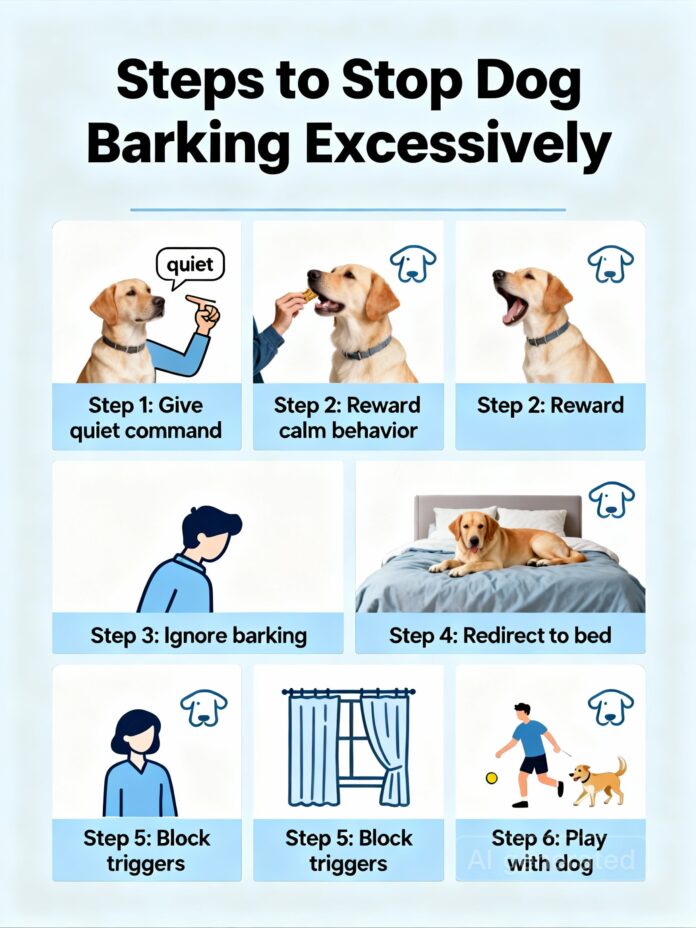
Excessive barking can be a significant issue for many dog owners. It can disrupt households, annoy neighbors, and create challenging situations in public spaces. Understanding why dogs bark and how to manage it is crucial for maintaining a harmonious relationship with your pet and your surrounding community. This guide explores effective strategies for reducing excessive barking through training, environmental adjustments, and understanding canine behavior.
Understanding Why Dogs Bark
Before applying solutions, it’s important to remember that barking is a natural behavior for dogs. It’s their way of communicating and expressing emotions. Barking can arise from several causes, including:
- Loneliness or Boredom: Dogs are social creatures and need engagement. If they’re left alone for long periods or lack stimulation, they may bark out of frustration or boredom.
- Fear or Anxiety: Some dogs bark when frightened or anxious due to loud noises, strangers, or unfamiliar environments.
- Alerting or Guarding: Many dogs bark instinctively to alert their owners about something new or to protect their territory.
- Attention Seeking: If barking has previously gained your dog attention, they may repeat it to get what they want.
Recognizing the root cause helps tailor your approach and create effective training plans.
Strategies to Reduce Excessive Barking
- Identify the Cause
Observe your dog’s barking patterns. Note when and where barking occurs and identify what triggers it. Understanding whether it’s due to strangers, noise, or separation will help guide your response. - Provide Regular Exercise
Regular exercise helps burn off excess energy and reduces anxiety. A tired dog is less likely to bark excessively. Activities such as brisk walks, playing fetch, tug-of-war, agility exercises, and using puzzle toys can keep your dog both mentally and physically stimulated. - Teach the “Quiet” Command
Training your dog to respond to the “quiet” command can be very effective.- Wait for a brief moment of silence after barking.
- Say “quiet” calmly and firmly, then reward your dog when they stop barking.
- Repeat consistently, gradually lengthening the quiet time before rewarding.
- Desensitize Your Dog
If your dog barks at specific stimuli such as mail carriers, doorbells, or other animals, try gradual exposure. Start by introducing the trigger from a safe distance where your dog feels comfortable. Reward calm behavior and slowly reduce the distance over time. This helps your dog learn that the stimulus is not a threat. - Use Positive Reinforcement
Reward calm behavior whenever your dog remains quiet during times they would typically bark. Praise, petting, or treats can reinforce their good behavior. Encourage them to stay relaxed during busy or noisy situations, helping them associate calmness with rewards. - Avoid Punishment
Never yell at or punish your dog for barking. This often increases fear and anxiety, which can worsen barking. Instead, focus on redirection, consistency, and rewarding silence. - Provide a Calm Environment
Creating a peaceful home can make a big difference.- Ensure your dog has a comfortable, quiet space to relax.
- Minimize external noises using white noise machines or closed windows if outside sounds trigger barking.
- Maintain a daily routine for walks, meals, and rest to reduce stress and insecurity.
- Consider Professional Training
If your dog’s barking persists despite your efforts, consult a professional dog trainer or behaviorist. They can help identify specific behavioral issues and develop a customized training plan. - Address Barking Due to Loneliness
Some dogs bark primarily when left alone due to separation anxiety. You can help by:- Gradually increasing the time they spend alone.
- Practicing calm departures and arrivals.
- Providing toys, safe chews, or leaving on soft music while you’re away.
- In some cases, adding a compatible pet companion can help.
- Use Bark Collars Cautiously
Bark control collars should only be used as a last resort and ideally under the guidance of a professional. Many collars can increase stress or confusion. Positive reinforcement should always be your first approach.
Conclusion
Excessive barking can be managed with the right combination of training, consistency, and patience. By identifying the causes, meeting your dog’s physical and emotional needs, and reinforcing calm behavior, you can reduce unwanted barking and create a more peaceful home. Every dog is unique—some may respond quickly, while others take time. With understanding, persistence, and compassion, you can help your dog become a quieter, happier companion.

