Quick Takeaways: The Ragdoll Cat Breed at a Glance
Temperament: Extremely affectionate, docile, and people-oriented.
Size: Large. Males 15–20 lbs; Females 10–15 lbs.
Coat: Semi-longhair, silky, and plush with minimal undercoat.
Lifespan: 12–15+ years.
Best Environment: Indoors with families, seniors, or other pets.
If you have ever dreamt of a pet that combines the loyalty of a dog with the elegance of a feline, the Ragdoll might just be your soulmate. Famous for their sapphire blue eyes, cloud-like coats, and tendency to melt into your arms, Ragdolls have captured the hearts of pet lovers worldwide.
In this Ragdoll Cat Breed Guide, we dive deep into the world of these gentle giants to help you decide if this “puppy cat” is the right addition to your family.
What Defines the Ragdoll Cat Breed?
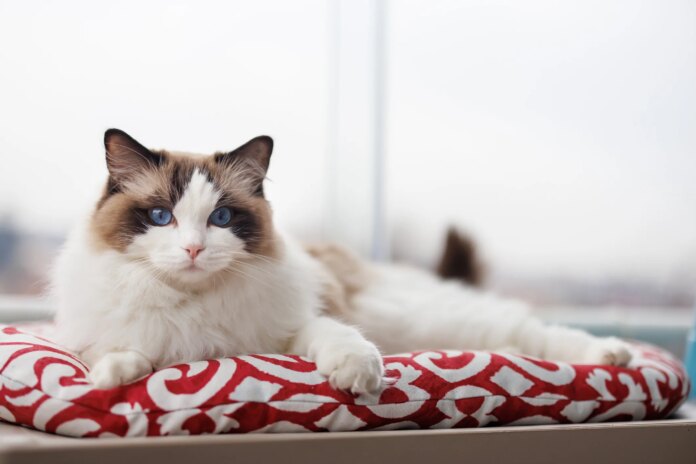
The Ragdoll is a large, semi-longhair cat breed renowned for its incredibly placid temperament. Developed in the 1960s in California by breeder Ann Baker, they were selected specifically for their gentle, non-aggressive nature.
They are a colorpoint breed, meaning they have a lighter body color with darker “points” on their ears, face, tail, and legs. Interestingly, all Ragdoll kittens are born white; their colors and patterns slowly develop as they age, with the cat reaching full maturity—both in color and massive size—around age four.
Personality: Why They Are Called “Puppy Cats”
The term “puppy cat” isn’t just a nickname; it’s an accurate description of the Ragdoll cat breed personality. They defy the stereotype of the aloof cat.
Shadowing: Expect company. Ragdolls prefer to be in the same room as their humans and will often follow you from the kitchen to the couch.
The “Flop”: True to their name, many Ragdolls relax their muscles completely when picked up, going limp in your arms like a child’s ragdoll toy.
Playfulness: These cats are intelligent and often enjoy games of fetch. They can learn their names and even come when called.
Gentleness: They are rarely aggressive and typically keep their claws sheathed during play, making them wonderful companions for respectful children.
Safety Note: Because they are so trusting and lack strong defensive instincts, a Ragdoll should always be an strictly indoor cat.
Appearance: A Large, Silky Companion
When consulting any Ragdoll cat breed guide, you will note that size matters. These are substantial, muscular animals.
Weight: Males are heavy, typically weighing between 15 to 20 pounds, while females are smaller but still sturdy at 10 to 15 pounds.
The Coat: They possess a semi-long, plush coat that feels akin to rabbit fur. Crucially, they lack a dense undercoat. This means they are less prone to matting than other long-haired breeds (like Persians), though they still require care.
Care Guide: Keeping Your Ragdoll Thriving
While Ragdolls are relatively low-maintenance compared to other long-haired cats, they have specific requirements to maintain their health and happiness.
1. Grooming the Coat
To keep their bunny-soft fur in top condition, you should brush them at least twice a week.
Tools: Use a steel greyhound comb to work through the fur, paying attention to the “armpits” where friction causes tangles.
Shedding: They shed moderately year-round, with heavier shedding periods in the spring and fall.
2. Nutrition and Weight Management
Ragdolls are prone to developing a “fat pad” on their lower abdomen. While this is a breed trait, it makes it easy to overlook actual obesity.
High Protein: Feed a high-quality, meat-first diet available at Hollywood Feed to support their large muscle mass.
Hydration: Incorporate wet food daily to ensure kidney health.
Activity: Because they are laid-back, use puzzle feeders to encourage mental stimulation and slow down their eating.
3. Exercise
They aren’t hyperactive, but they aren’t statues. They enjoy floor-level play.
Toys: Wand toys and catnip kickers are favorites.
Scratching: Provide sturdy, tall scratching posts. A Ragdoll is a big cat and needs a post that won’t wobble when they stretch out fully.
Health and Quirks
The Ragdoll cat breed is generally healthy, but prospective owners should be aware of potential genetic issues.
Health Considerations
Hypertrophic Cardiomyopathy (HCM): A heart condition where the heart walls thicken. Reputable breeders will DNA test for this.
Polycystic Kidney Disease (PKD): Cysts forming in the kidneys. This can also be screened for.
Charming Quirks
Water Babies: Don’t be surprised if your Ragdoll comes running when the shower turns on; many are fascinated by water.
Soft Voices: They are not known for being vocal. When they do speak, it is usually a soft, musical trill or chirp rather than a loud meow.

Recap: Is the Ragdoll Right for You?
To summarize our Ragdoll Cat Breed Guide, this breed is perfect for those who want:
A “lap cat” who actually wants to be in your lap.
A pet that gets along well with dogs and other cats.
A stunning, long-haired cat with manageable grooming needs.
A quiet, gentle presence in the home.
Frequently Asked Questions About the Ragdoll Cat Breed (FAQ)
Q: Do Ragdoll cats shed a lot?
A: Yes, but moderately. Because they lack a thick, wooly undercoat, they shed less than some other long-haired breeds. However, regular brushing is still required to keep hair off your furniture.
Q: Are Ragdolls hypoallergenic?
A: No. Ragdolls produce the Fel d 1 protein (found in saliva and skin) that causes allergies. While their lack of an undercoat reduces the amount of dander slightly, they are not hypoallergenic.
Q: How long do Ragdoll cats live?
A: With proper indoor care, a nutrient-rich diet, and regular vet checkups, the average lifespan of a Ragdoll is 12 to 15 years.
Q: Why must Ragdolls stay indoors?
A:Ragdolls are bred to be non-aggressive and docile. They often lack the instinct to defend themselves against predators or recognize the danger of cars, making the outdoors unsafe for them.

Next Step: Are you ready to welcome a gentle giant into your home? Visit your local Hollywood Feed to speak with our experts about the best nutrition and grooming tools for your new friend. Follow our blog for more tips on keeping your pets happy and healthy!

